If you run a mid-size ecommerce store, somewhere between 10,000 and 100,000 SKUs, with annual revenue in the $5M–$100M range, you've probably shortlisted at least two of these three platforms. Klevu (now part of Athos Commerce), Algolia, and XTAL occupy different positions in the market, but they all land in the same evaluation cycle for growing merchants who have outgrown native platform search.
This article is a single, side-by-side resource. We cover features, pricing, setup complexity, and AI capabilities, and we say where each platform wins. Full disclosure: XTAL is our product. We have tried to be specific enough that you can check every claim yourself.
For a broader survey of the search market, see Algolia alternatives for ecommerce. For deeper individual comparisons, see the XTAL vs. Algolia and XTAL vs. Klevu pages. If the Searchspring side of the Athos Commerce merger is relevant to your evaluation, see XTAL vs. Searchspring.
Why These Three Platforms
Algolia is the incumbent. Its indexing is fast, its API is well documented, and its InstantSearch UI libraries are mature. For teams with in-house engineering capacity, it became the safe, defensible choice, and in 2025 it moved most of its AI features into self-serve tiers.
Klevu was built for ecommerce merchandisers rather than developers. It integrates natively with Shopify and Magento, includes genuine NLP and semantic search at non-enterprise pricing, and its customer base skews toward fashion, home goods, and specialty retail. In January 2025 Klevu merged with Searchspring and Intelligent Reach to form Athos Commerce. Klevu now operates as a division of Athos, the combined platform has been rolling out through 2025 and 2026 (the flagship Intelligent Discovery Platform shipped mid-2026), and new contracts are Athos Commerce contracts.
XTAL is the newest of the three and the only one built around LLM reasoning from the start. Every search runs through a two-stage LLM pipeline: query augmentation before retrieval, and a brand-aligned re-ranking pass after it. It deploys as an embeddable JavaScript snippet with no theme modifications. Evaluate XTAL if you want AI-native search with simpler pricing and faster deployment, and you are comfortable being an early adopter. If you need a decade-plus track record and hundreds of prebuilt integrations, look at the other two first.
Feature Comparison
Which Platform Wins in Each Scenario
You have a Shopify Plus store and a merchandising team, not a search team.
Pick Klevu (Athos). The merchant dashboard gives non-technical merchandisers control over boosting rules, A/B tests, banners, and category pages without engineering involvement. The Shopify integration is mature and the support team is consistently praised in reviews. See the Klevu comparison page for a full breakdown.
You have a headless or custom storefront and a strong frontend engineering team.
Pick Algolia. InstantSearch libraries, extensive SDKs, and a well-documented API make it the most developer-flexible platform of the three. Klevu's headless support requires more custom work; XTAL's snippet works on custom storefronts but is less suited to fully custom search UIs. Grow Plus gives you AI features at a reasonable entry price for this architecture. See the Algolia comparison page for more detail.
You want AI-quality search live this week without an engineering project.
Pick XTAL. If your storefront runs on Shopify, WooCommerce, or a custom build, the snippet model is the fastest path to intent-aware search: no synonym curation, no boosting rules, no theme work. It is the best fit for teams who want the most current AI approach and accept an early-adopter platform to get it.
You need category page merchandising alongside search.
Pick Klevu (Athos) or Algolia. Both offer visual merchandising for category and browse pages. XTAL focuses on the search overlay and does not cover PLP merchandising today. If managing product listing pages matters as much as the search box, that decides it.
You are on a tight budget at moderate search volume.
Pick Algolia. Its metered model has the lowest entry price at moderate search volume. The tradeoff is that the bill scales with traffic, records, and variants, and spikes produce overages.
Pricing Comparison: The Mid-Market Scenario
For this section we use a representative mid-market scenario: 50,000 searches per month, 20,000 SKUs.
Algolia
Algolia's pricing is metered. Grow includes 10,000 search requests per month, then charges $0.50 per additional 1,000, while Grow Plus charges $1.75 per additional 1,000. Records are billed separately, so the headline search-request rate does not represent the full bill. NeuralSearch, Merchandising Studio, and real-time personalization are available only with Elevate, which requires an annual contract and has no published price. Budget for the configuration you actually need, not the headline meter.
Klevu (Athos Commerce)
Since the merger, Athos Commerce has structured its platform pricing around Onsite Discovery, Offsite Discovery, and Complete Discovery plans, with AI modules available as add-ons. Athos publishes no dollar figures for these plans and directs buyers to request pricing. The Klevu Shopify app is the only published price point, with tiers at $449/month, $549/month, and $649/month.
Quotes are sized to traffic, catalog size, and modules, but the cost is flat within a contract term, so month-to-month spend is predictable. That is a real advantage over metered pricing if your traffic is variable. Legacy Klevu contracts remain supported through a migration window, but new capabilities ship on the Athos platform, so evaluate and price Athos, not legacy Klevu tiers.
XTAL
XTAL publishes its pricing: $0.10 per search, up to 50,000 searches/month, with volume pricing above that. Everything is included at every volume: both LLM stages, all integrations, no setup fees, no annual contract, no feature gates.
The model trades a metered rate for zero overhead: the two-stage LLM pipeline on every query, no record fees, no overage tiers, no relevance-engineering time, and deployment measured in days. For stores above 50K searches/month, volume pricing applies. When you compare costs, compare total cost of ownership: the subscription line is only part of what legacy platforms cost once relevance tuning, synonym curation, and search UI maintenance are counted.
Setup Complexity and Time to Go Live
Algolia
Developer-first, medium effort. InstantSearch libraries for React, Vue, and vanilla JS make basic keyword search achievable in a few days for an experienced developer. Well-tuned AI search takes several weeks of iterative relevance work: ranking attributes, synonym dictionaries, rules, and boosting logic all need attention. Algolia's no-code merchandiser tool, Merchandising Studio, is gated to Elevate contracts; on the self-serve tiers, relevance tuning happens in the developer-oriented dashboard, which assumes technical familiarity.
Basic search: 3–7 days. Well-tuned AI search: several weeks.
Klevu (Athos)
Merchandiser-first, low-to-medium effort. The Shopify app installs in under an hour for standard stores, and the merchant dashboard lets marketing teams manage boosting rules, banners, A/B tests, and category configuration without touching code. Headless or custom storefronts require developer work through the APIs and SDKs, and reviews note that the full feature set on custom builds takes significant effort. Support is widely praised and faster than most alternatives at this price tier.
Shopify standard: 1–3 days. Shopify Plus / custom: 1–4 weeks.
XTAL
Snippet-first, fast deployment. XTAL deploys as a single <script> tag: drop it into your storefront's <head>, configure your shop ID and product URL pattern, and it intercepts your existing search input and renders results in an overlay. On Shopify, WooCommerce, or custom storefronts, basic deployment is measured in hours, with no theme modifications and no rebuilt search results page.
The tradeoff: XTAL covers the search overlay well but does not offer category page merchandising or the visual PLP control Klevu provides. If browse-page management is a core requirement, note that gap.
Search overlay, any supported storefront: same day to 2 days. Advanced configuration: under 1 week.
AI Capabilities: Where the Three Diverge
Typo tolerance and basic synonyms have been table stakes for years. The question in 2026 is whether the platform understands intent, not just keywords.
Algolia's AI is real but tier-gated. Grow Plus adds AI Synonyms, behavioral AI Ranking, and personalization. True semantic retrieval, NeuralSearch, is Elevate-only: it combines keyword retrieval with vector embeddings and competes with the best semantic search available. The catch is that most mid-market merchants at 50K searches/month are on Grow or Grow Plus, and the capability gap between those tiers and Elevate is significant.
Klevu's engine is machine learning trained on ecommerce transactional data: it understands category context and uses clicks, conversions, and add-to-carts to refine ranking continuously. Its NLP covers intent recognition and long-tail queries, while its site-search product supports 31 languages. Its LLM product, now called Conversational Assistant, is separate from the core ranking pipeline and is one of three independent AI Agent add-ons alongside Channel Assistant and GEO Assistant. Post-merger, the Athos platform folds Klevu's search together with Searchspring's merchandising and Intelligent Reach's feed management into one product line with AI modules as add-ons.
XTAL takes a different architectural path: two LLM stages around retrieval rather than a trained ranking model on top of it. Before retrieval, an LLM enriches the query with brand context and intent classification, so "something cozy for the bedroom" becomes a structured request that understands your catalog. After retrieval, a second pass re-orders candidates against your brand's marketing priorities. In practice this handles conversational and long-tail queries that trip up keyword-plus-ranking systems, and it removes synonym and boosting curation entirely. The tradeoff is latency: LLM stages add processing time, which XTAL offsets by parallelizing requests asynchronously. It is the strongest of the three at intent understanding, and the least proven: less tuning history than Klevu's model, and an early-adopter bet rather than an established one.
Not sure which platform is worth the investment?
Find out where your current search is losing revenue before you buy anything. The XTAL Search Grader scores your store across eight quality dimensions in under two minutes, so you walk into vendor demos knowing exactly what you need.
Run a free search auditFAQ
Which is better for Shopify: Klevu or Algolia?
For a standard Shopify merchant who wants search running quickly with minimal developer involvement, Klevu generally wins: the app installs fast, the dashboard is built for non-technical users, and AI features are included without tier upgrades. Algolia is the better choice for headless Shopify setups or deep customization. See the full Klevu comparison and Algolia comparison.
Is Klevu or Algolia more expensive for a mid-size store?
Algolia has the lower published entry rate: Grow includes 10,000 search requests, then charges $0.50 per 1,000 additional requests, with records billed separately. Grow Plus moves that to $1.75 per 1,000. The Klevu Shopify app lists tiers at $449, $549, and $649 per month. A complete comparison depends on tier, record volume, and what the Athos quote comes back at, since the broader Athos plans and Algolia Elevate are both quote-only. Compare the configuration you would actually buy rather than the two entry points, which are not alike.
Does XTAL work on Shopify?
Yes. XTAL deploys as a <script> tag on Shopify, WooCommerce, and custom storefronts. It intercepts the existing search input and renders results in an overlay without modifying theme files, so no theme update is needed and it works the same way across storefronts.
What happened to Klevu after the Searchspring merger?
Klevu, Searchspring, and Intelligent Reach merged in January 2025 to form Athos Commerce. Klevu now operates as a division of Athos, and the combined platform rolled out through 2025 and 2026, with the flagship Intelligent Discovery Platform released mid-2026. Existing Klevu customers keep support through a migration window, but new capabilities ship on the Athos platform, so evaluate current Athos plans and pricing rather than legacy Klevu tiers. For the Searchspring side, see XTAL vs. Searchspring.
The Bottom Line
- Klevu (Athos): the default for Shopify Plus merchants with merchandising teams who want proven search and category page control.
- Algolia: the default for engineering teams on headless or custom storefronts, and the cheapest at moderate volume; its best AI sits behind Elevate.
- XTAL: the pick for intent-based, conversational search deployed in days without theme engineering, with one flat published rate, for teams comfortable adopting early.
None of the three is universally better; the market genuinely segments by team shape and platform architecture. Start by measuring your current search baseline, then pressure-test each vendor on the specific gaps that report surfaces.
Get more like this
AI-powered ecommerce search insights, delivered monthly.
Founder & CEO, XTAL Search
Continue Reading
Algolia Alternatives for Ecommerce in 2026
A vendor-neutral comparison of the best Algolia alternatives for ecommerce search, with honest pros, cons, and pricing for each platform.
XTAL vs Searchspring: Which Search Platform Is Right for Your Store?
An honest comparison of XTAL Search and Searchspring (now Athos Commerce) — what changed after the merger, feature differences, and who should switch.
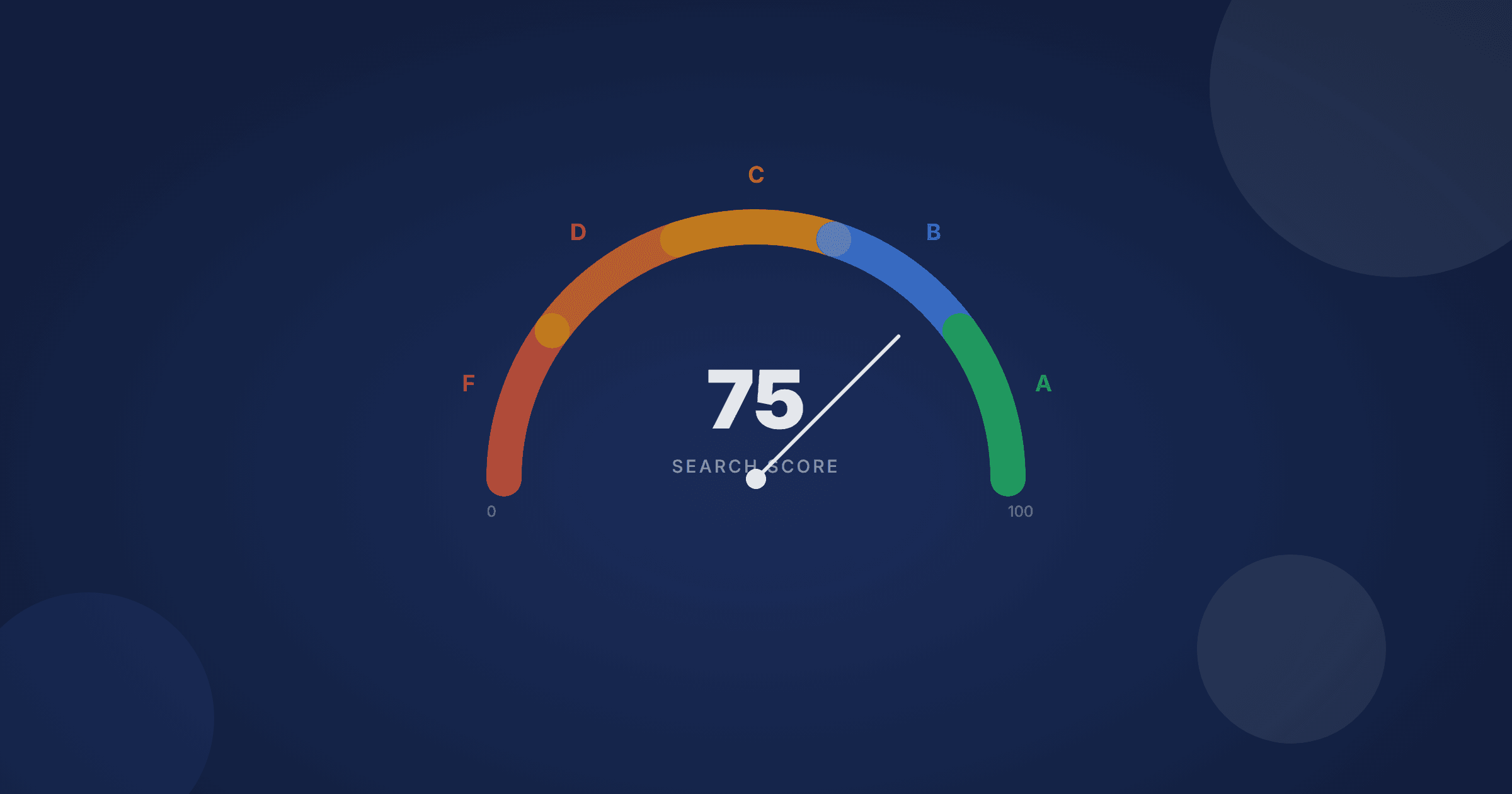
What Is a Good Ecommerce Search Score?
Learn how to objectively measure your store's search quality across 8 dimensions, what scores mean, and how to identify where your search is falling short.